
Why Women Over 55 Should Talk With Their Providers About Menopause
But be mindful that most healthcare providers are poorly educated about this life-changing time
By James Woods, M.D., and Jocelyn Goldberg-Schaible, MBA
 Significant changes in menopause care and management of midlife women are creating uncertainty and raising questions. Or so it seems.
Conversations among women at fitness centers, grocery stores, churches and community centers are suddenly everywhere. Yet despite advances in understanding the biology of perimenopause and menopause care, most healthcare providers are poorly educated about this life-changing time and many women are either confused by advice from uninformed care providers, told by those without expertise that hormones are dangerous or find symptoms they are experiencing dismissed as an unavoidable part of aging.
With all the recent advances in medicine, why has menopause management among healthcare providers not been advancing? The lack of professional knowledge of menopause management is an embarrassment. Perhaps it is finally time for women to take control of the discussion by speaking out.

This article focuses on encouraging women to do just that and offers an approach to improve those important conversations.
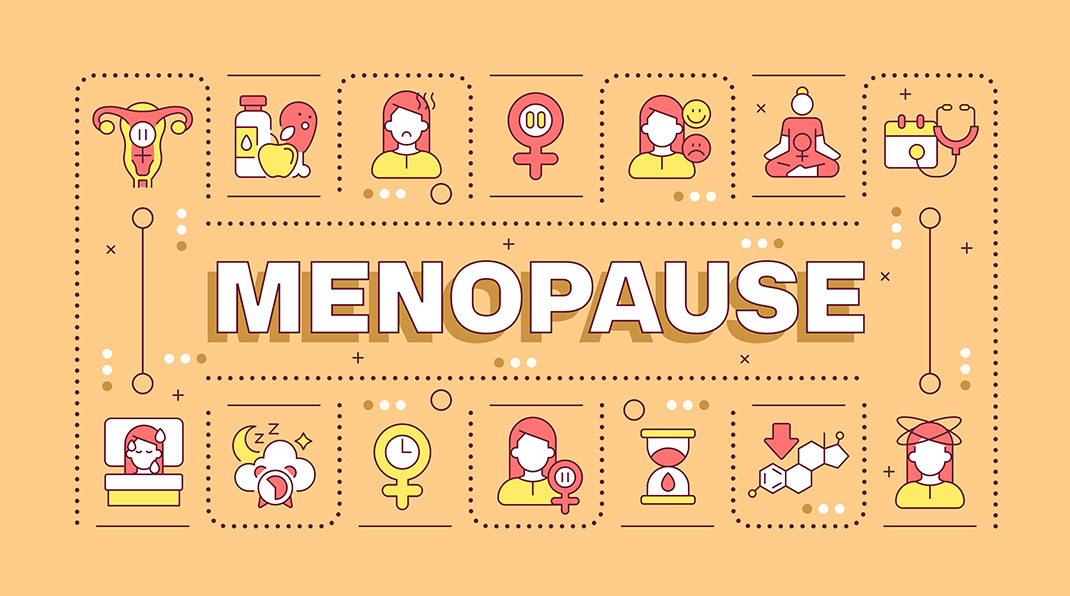
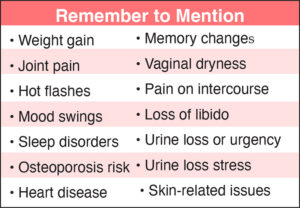
What does menopause really mean to women? Menopause management involves far more than simply delivering hormone replacement. It demands attention to diet, exercise and family life for the woman and impacts the rest of her family. Moreover, the myriad changes that affect women differ from individual to individual. The most common complaints are hot flashes and sleep disorders, but also mood swings, memory lapses, anxiety, skin-related changes, depression, painful sex, urine incontinence and weight gain.
So, what do we know about this complicated time in a woman’s life?
The value of hormone replacement therapy (HRT) for menopausal women first became apparent more than 50 years ago with publication of the book “Feminine Forever” by Robert A. Wilson. Controversy followed as some feminist movements argued that menopause years should be considered a natural path of life and not medicalized via HRT treatment. A significant shift then occurred in 2002 with publication of the Women’s Health Initiative (WHI) in JAMA Express. The NIH-funded study involved 10 years of treatment with Prempro, a combination of Premarin, (a urine extract of pregnant horses) and Provera (a synthetic progestin). Their troubling conclusion was that estrogen causes breast cancer.
Within days, the paradigm shifted and health care providers would be depriving midlife women for the next 20 years from hormone replacement therapy and its many benefits.

Simply speaking, doctors did not fully understand the biology and management of menopause and so they accepted these false findings without question. In fact, the actual data from that study showed that fewer than one woman out of 1,000 on Prempro developed breast cancer, a number far too low to support a clinical conclusion. Moreover, women with hysterectomies who only used Premarin did not show any increase in breast cancer.
Only now, in recent years, are articles being written indicating how much damage to midlife women’s health was done as a result of that clearly flawed study.
Have more recent studies clarified the value of HRT for menopause care?
Almost but not completely.
Other studies since have been published including the SWANN study initiated in 1994 and the Nurses study in 1976. But each has shared a critical limitation: all measures in these studies required that the data be quantified. How many hot flashes? How much weight gain? How much sleep was compromised? But none of them evaluated one’s quality of life, the lived experience, which of course is the central theme for most menopausal women.
Let’s back up and explain why so many symptoms appear during perimenopause and menopause.
From puberty until the mid-40s, the ovaries generate high levels of the most powerful estrogen called estradiol. Estradiol is a powerful blocker of inflammation and protects us throughout the reproductive years. But after age 40, the ovaries begin to age and estradiol levels begin to decline. As a result, many of the symptoms normally associated with menopause begin to emerge even while women are still menstruating. This time in life is called perimenopause and it is often linked to changes in mood, memory, sleep, anxiety and depression.
 Onset of menopause, then, is defined as one year without a menstrual period. Over the next several years, many of the disturbing symptoms first experienced during the perimenopause often persist as a direct result of the natural loss of estradiol, leading to total body inflammation.
Armed with this background insight, how can women best present their own issues to their care providers?
Communication is a critically important starting point. But even with improved communication, serious issues confront certain segments of the population. The fact is availability of appropriate HRT management has not been evenly distributed.
Let’s look at the data.
In 2026 it is estimated that 80% of midlife women struggle with life-changing symptoms, resulting in an annual $1.8 billion loss in the workplace from absenteeism. Yet only a small percentage of midlife women are properly receiving hormone replacement therapy. For African-American women that percentage is significantly lower than it is for white women. For example, in one studied community described by Keating, 64.8% of non-Hispanic white women were using systemic HRT and 65.4% were using vaginal estradiol. In contrast only 29.7% of non-Hispanic black women were using systemic HRT and only 25.0 % were using vaginal estradiol.
Moreover, black women are reported to have a higher menopause burden compared to White women, including vasomotor symptoms (VMS) and uro genital symptoms. Yet fewer seek management for symptoms and relief.
Given the overarching purpose of our article, to help women speak with their care providers about menopause, here are a few suggestions.
Because an office visit is time restricted, statements such as “I don’t feel well” offers no specific focus for a constructive conversation.
It is much more helpful to state specifically what components of your health bother you most.
If describing your health issues is uncomfortable, this checklist may provide a helpful reminder of things worth mentioning to focus the conversation:
If your care provider is not comfortable discussing menopause biology, ask them to refer you to an individual or practice specialized in menopause care.
In today’s environment, women deserve to be empowered to confidently speak to their care providers about perimenopause and menopause. Doing so will encourage those care providers to learn about the biology and management of menopause, steps that will significantly improve women’s health.