

Ways to Volunteer
By Deborah Jeanne Sergeant
Volunteering isn’t just about helping out others — although that’s enough reason to volunteer.
It can also help you during retirement.
Don’t just sit at home watching TV. That’s about the worst thing you could do for your health.
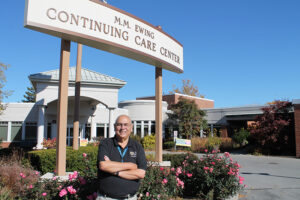
August “Augie” Lindsay, 77, a Lima resident, began volunteering with Thompson Health in Canandaigua 12 years ago, soon after he retired from his role as vice president of operations for a communications company.
Lindsay volunteers at M.M. Ewing Continuing Care Center two full days weekly, including transporting residents and rehabilitation patients to therapy appointments; wiping down equipment; and assisting with therapy sessions. This may involve following the physical therapists and patients with a wheelchair as they practice walking and joining activities like balloon tennis to promote balance or throwing a ball.
Although Lindsay jokes that he is sometimes older than the nursing home residents he encounters, he said he gets a lot out of volunteering.
“It keeps me active. It keeps me out of my wife’s hair and I enjoy being able to help the staff and the patients and residents,” he said.
He also likes interacting with the staff members and residents, some of whom do not have many visitors.
“It feels good to be able to help,” Lindsay said. “And it keeps me out of trouble. I enjoy it!”
Beyond emotional health, volunteering can involve a physical and social aspect, both of which are good for physical and mental health. Unfortunately, many people reduce these elements once they retire.
Neurologist Marla Bruns, with Rochester Regional Health’s Neuroscience Institute, specializes in memory care, neurology and physical medicine and rehabilitation. She said that any activity that gets people out of the house and interacting with others socially “is good for your brain and can involve more physical activity. It keeps the mind working and the activity going.”
At Highland Hospital, Kim Huels, the manager of Friends of Highland volunteer program, said that of the hospital’s 100 daily volunteers, about one-third are retirees.
“They do a variety of things, like work in the gift shop, sit with patients to reduce anxiety and help with physical therapy,” Huels said. “I hear about people saying it gives them social, physical and mental health benefits.”
Volunteering gives retirees a reason to get up in the morning and some accountability for staying active.
To find where you can volunteer, consider your interests.
If you enjoy spending time with your grandchildren, look no further than your own family. Think about setting up a regular babysitting schedule so your adult children can reduce their reliance on daycare. Or if that’s asking too much, perhaps a few days per month to give your parenting kids a break would allow them more time as a couple. Could you take over transporting the kids to some of their extracurricular activities or appointments? Maybe your teenaged grandchildren could use a seasoned driver to ride along as they learn. You could also ask at your grandchildren’s school about any volunteering opportunities.
What opportunities exist in your own neighborhood? Perhaps an elderly neighbor could use a hand with home upkeep, a home-cooked meal or running errands. If you’re already friends with the family, ask a neighbor with children if they could use an occasional babysitter at no charge.
When deciding what to do to volunteer with an organization, lean into your strengths and interests.
Huels said that candidates for volunteering at Highland must pass the state-required screenings and tests for volunteering in a healthcare setting and then she talks with them about what they want to do at Highland and whether they want to work with people or not.
If you worked in marketing, you could help spread the word for a nonprofit, for example. People who have worked in finance may help with the books. Or if you need a break from the grind of your career, find a completely different way to give your time. You may not need to make it a regular gig. Some organizations need sporadic or seasonal help, which makes it easier for retirees to participate.
Reach out to your body of faith, club or civic organization. Now that you’re retiring, you’ll have more time to participate.
What organizations support causes you uphold? Look online for a local branch of that organization that could use your help and see where they could use assistance. Even if no volunteer opportunities are listed, the leader can likely find something meaningful for you to do.
The nationwide homecare crisis has left many organizations scrambling to find companionship and transportation volunteers to support older adults still living at home. Volunteering through an agency can ensure that you receive training and sometimes a stipend to cover driving expenses. A friendly face and a couple of hours of visiting can help seniors stay independent longer.
Many organizations support people with disabilities through mentorship, job training, companionship and more. As with volunteering with seniors, these organizations typically provide training and ongoing support to volunteers as they assist people with special needs.
Animal rescue organizations and shelters are ideal venues for animal lovers to volunteer, whether it’s in a hands-on role or in administration. Some organizations focus on pets and others on farm animals.
Need more ideas? Check out United Way’s site, https://unitedwayrocflx.org.