
Martial Arts: Not Just for Karate Kids
Why you might consider tying on a belt and trying martial arts
By Deborah Jeanne Post
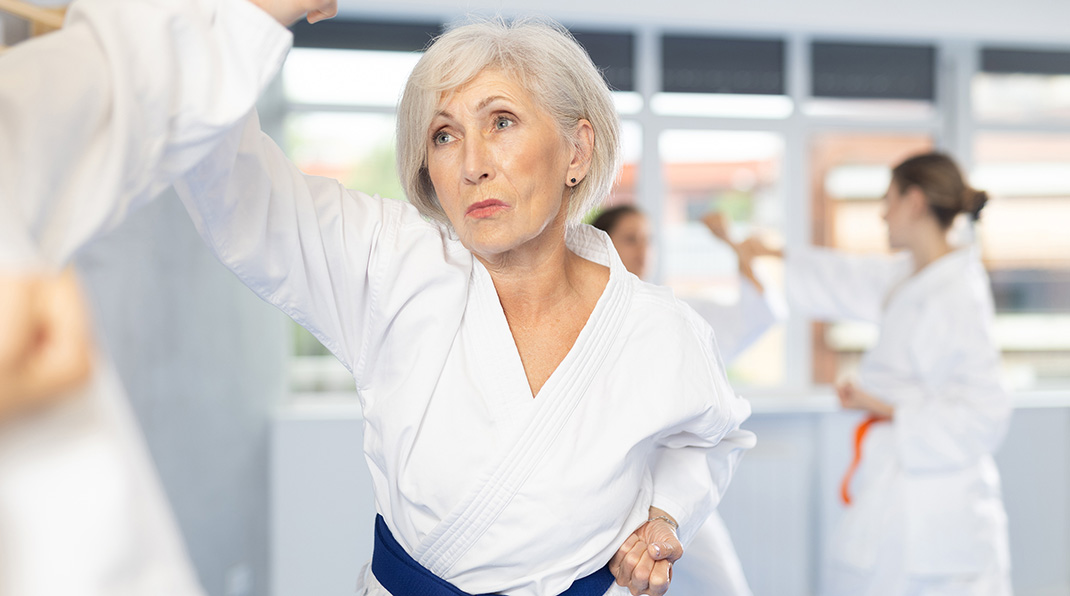
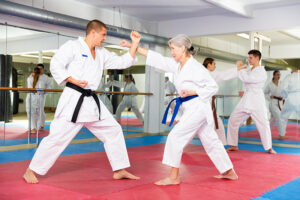 It may seem like only children participate in martial arts classes, colloquially called “karate,” even though that is a specific style.
But that’s not the case at Finger Lakes Martial Arts Center in Geneva. For example, student Doug Reagan, 64, has been practicing for 10 months.
“I’d been wanting to try it for a while but life gets in the way,” Reagan said. “It was a little intimidating at first as I’m rolling with guys in their 30s and 40s. I had been weightlifting and doing cardio otherwise. Most guys my age are not in the greatest shape. I knew I was decently mobile. But even if you have issues, you can go slower and work around them.”
Reagan likes how martial arts challenges his body in ways that other types of workouts do not. And the learning curve of trying something new is a challenge he has embraced, as it stimulates his mind.
“You feel like you aren’t progressing,” he added, “but don’t be intimidated. You won’t be good at it for a long time.”
His instructor, Jerry Martin, is 58. Martin owns the school and holds a brown belt in Brazilian jujitsu, second degree black belt in Huang Ga Kung Fu and has won national and international championships in his age group. He believes that although anyone can benefit from martial arts practice, some may not like what martial arts gives them.
For those who are interested, he advises receiving a doctor’s clearance and then trying it out. Seeking a school that takes a thoughtful, careful approach is also important, as students should be gradually introduced to new movements and techniques as they gain skills. Students should be encouraged to speak up if they’re struggling or have some kind of physical limitation.
“You are responsible for yourself,” Martin said. “If you’re going too hard, that’s where injuries happen.”
He likes that Brazilian jiujitsu, which is similar to wrestling, engages muscles in ways that are hard to access with other activities.
“There is always an opposing force,” Martin said. “You’re trying to resist force coming at you. You have to use compulsory muscles you don’t’ necessarily use a lot. Obviously, you learn self-defense. I feel strongly it’s important to defend against attackers.”
Students develop self-confidence as they learn and master skills that at first seem out of reach, and then help teach others.
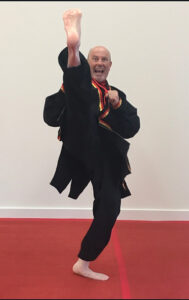
At Kuk Sool Won of Williamson, owner Gary Evarts, ninth degree black belt, is 71 and has practiced the Korean martial arts system for 50 years.
Kuk Sool Won includes the 32 indigenous Korean martial arts and as a hard-soft style uses joint locks, pressure points and low stances to gain advantages over opponents. Low stances help build strong lower body muscles, which are vital to improving a person’s ability to stay independent as an elder adult. Kuk Sool Won students learn falling and throwing, traditional weapons and hundreds of self-defense techniques.
Typically, visitors who schedule a free class join the group with an experienced instructor offering one-on-one guidance so they know what to do next.
“Once you get over 40, it can feel intimidating to try martial arts,” Evarts said. “And after 55, it’s ‘I’m definitely not doing it.’ It’s a mental state. Other people think they need to get in shape first. Those people seem to never join. But if they come in, they’ll realize they have an instructor who doesn’t care about their preconceived limitations and who say, ‘I’ll help you do this; it was very brave to walk in the door.’ They try it and find out they can do it.”
He added that a good martial arts school will not require students to kick above their head if they can’t but will train on how to kick properly and how to tap into their strengths and how that martial art style can work for them.
Evarts likes Kuk Sool Won’s “ki breathing,” which involves controlled breathing in through the nose and out through the mouth for lowering stress and gaining focus. Overall, he finds that practicing martial arts “is a great stress reliever,” he said. “Martial arts in general will help maintain a healthy lifestyle in the sense of our body conditioning. It’s set up to help strengthen our ligaments, tendons, organs and our whole mindset. When you can do that, you’re headed forward with longevity. It’s a self-defense system for you personally, head to toe. Not kicking punching someone, but for your health, longevity and mobility and your mind.”
Many studies indicate that mental work combined with physical movement supports good cognitive health. Martial arts involves memorizing techniques and movement sequences (“forms” or “katas,” oftentimes) that engage body and mind simultaneously.
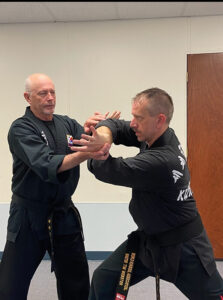 Adam Tucker is only 40, but as co-owner of Ronin Martial Arts Academy in Rochester, he and his wife, Julie, co-owner of the school, teach a few styles, including traditional karate, bang muay thai, a kickboxing style; and Hayastan grappling. Tucker holds a second-degree black belt in karate, blue belt in bang muay thai and brown belt in Hayastan grappling.
“A lot of times what ends up happening, we tend to get more stagnant as we get older,” Tucker said. “With cardio and with conditioning, these movements help with bone health and strength. It helps keep the body moving the way it’s supposed to do. When we’re young, we’re constantly active. Then we stop moving.”
Tucker appreciates the supportive atmosphere at his school, as people from all backgrounds and walks of life help promote the physical and emotional health of students.
“There are some schools out there that are more like a fight gym where they want everyone to match the same intensity,” Tucker said. “There’s difference between that and an actual martial arts school. We’re here to help everyone on the path. My biggest job as an instructor is to find the goal and path that helps someone and helps people to be where they need to be to reach their goals.”
Some goals may include better cardiovascular fitness, improved balance, safer falling in case of a fall and maintaining muscle mass. Many older adults experienced diminished sense of balance. Tucker said that the stabilizer muscles that prevent falls can become weaker with lack of use.
“Getting moving by starting slow and pacing yourself and putting in effort will help with those muscles and with balance,” he said. “As you build up muscle mass and perform weight bearing exercise, it does help build up bone density and strength.”
He encourages people interested in martial arts to find a school that they feel connected to and that also looks out for their health and safety.
“We’ve had students over 55, ones with injuries and all sorts of things,” he said. “It’s my job to help you stay safe and reach your goals whether self-defense, punching a bag or learning kata.”