
LAST PAGE: Darlene Esposito, 66
Decades helping those in crisis
By Mike Costanza
On May 31, Darlene Esposito worked her last shift answering calls for the US Department of Veterans Affairs Veterans Suicide Hotline, ending a decades-long career of helping people in crisis.Before working for the VA, the married Rochester resident headed out onto city streets with the Rochester Police Department’s Family Crisis Intervention Team and responded with UR Medicine’s Mobile Crisis Team to mental health crises in the community. Just before she retired, she spoke to 55-PLUS about her career path and experiences. Her answers were edited for clarity and brevity.
Q. You’ve spent decades working with veterans in danger of suicide, families in crisis or individuals who are having mental health issues. Why have you chosen to do this kind of intense work?
A. Well, I think and I truly believe that when people are at their worst, they need the most help.
Q. You originally trained to be an art therapist. Was it a stretch to use that training to help people in crisis?
A. Not really, because in art therapy, you know, you have to understand and have the ability and the intuition about the person that you’re working with.
Q. By the time you retire, you will have spent 14 years and 10 months answering calls for the Veterans Suicide Hotline. How have you helped veterans get through their crises?
A. Above and beyond anything, we make sure that veteran remains safe throughout the whole process. They might be suicidal. If an individual is holding a weapon, we ask them if they could put the weapon down, in most cases they are more than willing to. After you make sure that they’re safe you work on developing that relationship. That’s extremely important, because if you don’t and you start doing the assessment, you’re not going to get anywhere.
Q. If the caller is not considering suicide or you’ve made sure that the person’s safe, what’s the next step?
A. You would talk with them on what they’re looking to do. If they’re looking for counseling, if they’re looking to just to talk, if they’re looking to get some kind of help somewhere else, like maybe to see their doctor or something, the suicide prevention coordinator would be contacted and they would make those calls and appointments. You don’t want to send them [the caller] off on a tangent, especially when they’re really in need of support.
Q. During your seven and a half years with the Rochester Police Department’s FACIT program you accompanied police officers to crime scenes. Could you tell the readers about that?
A. We would go on any call that patrol needed us. A homicide or a suicide, a domestic, anything where they thought they could use help with the family, and we were called quite often. I loved that job. It gave you enough responsibility to take care of the person or family when they needed it.
Q. Let’s say that someone suffered an assault or some other form of violence. How might you help the victim’s family?
A. If the [victim] is alive, I take [the family members] in my vehicle to the hospital that the person is going to. During that time, I talk to them about being their contact person, being the in-between to the doctors and the emergency team. I would get their questions answered because I had the availability to go right where the individual was taken care of, like in the trauma unit. I had the ability to go in there, see what was going on or talk to a nurse or a doctor so that I can share the information.
Q. Prior to joining the FACIT program you spent a year and a half with UR Medicine’s Mobile Crisis Unit. What was that like?
A. We would work for Lifeline. They would send us cases and the police would send us cases where mental health would be a concern. If somebody had a diagnosis of schizophrenia, we would go to their home, evaluate them and see if they needed to go to the hospital or needed a crisis appointment. We would set them up on crisis appointments. or we would transport them to the hospital.
Q. Once you retire, what do you plan to do with all that free time?
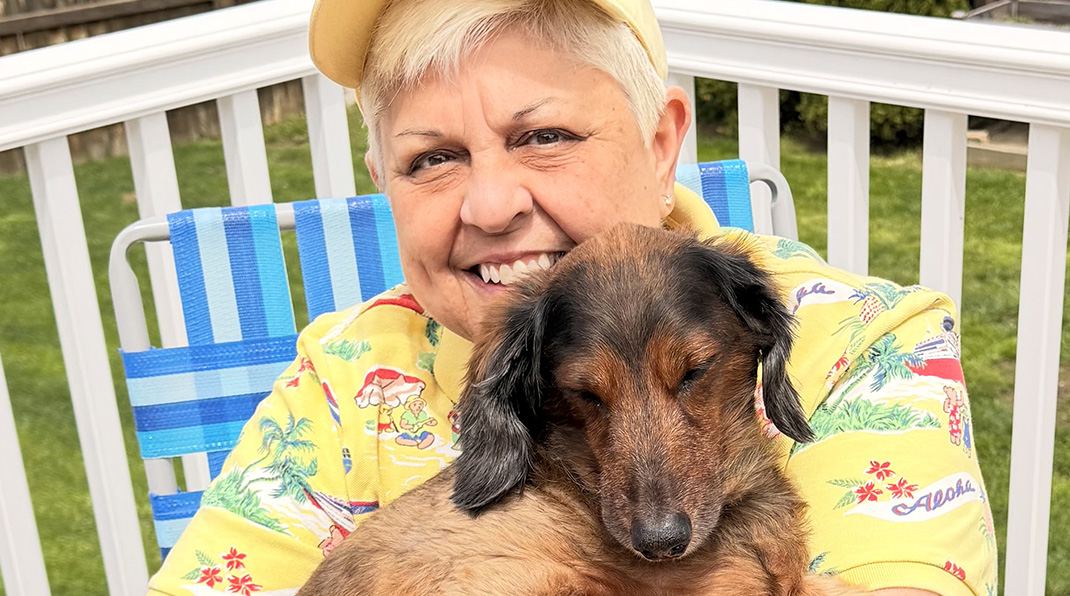
A. Well, I have things that I want to get done around the house and my yard, but I have five important little people here that are extremely important to me, my five dachshunds. I just love the breed. I want to spend time with my partner, as well.