
Retire South or Stay Put?
Where do you want to live in your retirement years?
By Deborah Jeanne Sergeant

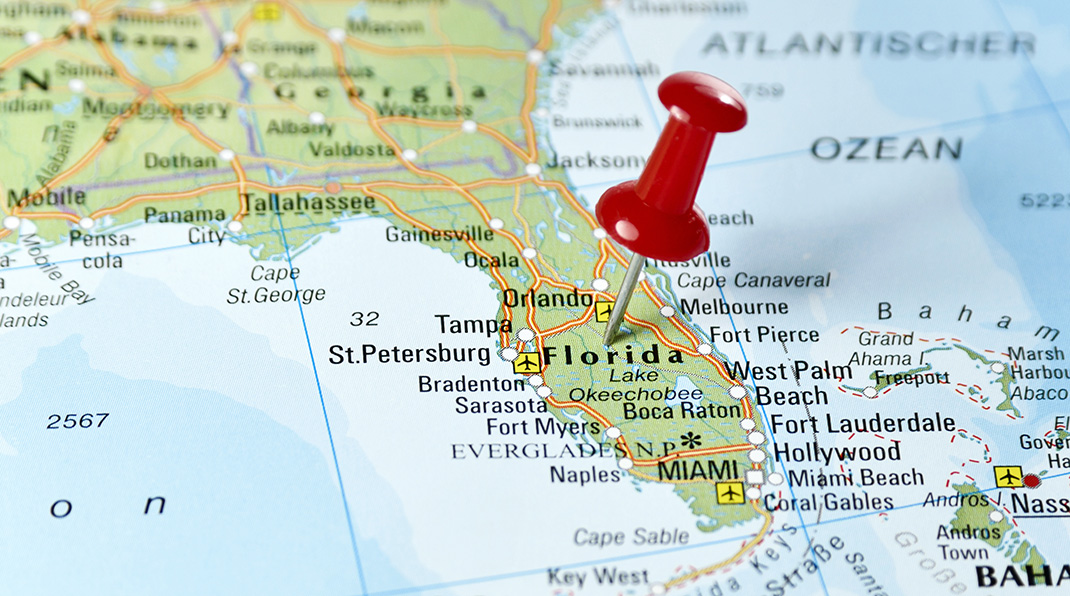
The top states attracting interstate moves by retirees, according to the US Census Bureau, are Florida (11.1% of those moving into the state), South Carolina (10%), New Jersey (6%), Texas (5.8%) and Washington (5.3%).
New York represents the second-most popular state to leave in retirement (11.4% of outbound moves), bested only by California (18.3%).
Of course, retirees have many reasons for choosing to live out of state, including a warmer climate than New York and the desire to live near amenities they enjoy and places they have visited while vacationing. But their financial reasons can also influence the trend.
In addition to personal reasons for moving South, Ethan Wade, chief development officer, senior vice president and financial adviser at Brighton Securities in Rochester, said that income tax may be a factor.
“You may not have to pay a state income tax in states like Florida or Tennessee as they do not have a state income tax,” Wade said. “New York is one of the highest tax states in the country. This could be a meaningful difference for people living on a retirement income. They would pay only federal income taxes.”
Other states with no income tax include Alaska, New Hampshire, Nevada, Texas, Missouri and Kentucky.
Leaving New York because of its higher cost of living seems to be a main factor to those moving South, according to Peter Tallarico Jr., financial adviser and president of Blue Ridge Financial Services in Syracuse.
“It’s important to not over complicate when comparing these costs,” Tallarico said. “Involving your accounting or financial professional makes it even easier. I simply compare the costs. But remember, if you retire with a New York state pension, that pension is not subject to New York state income taxes but may be subject to other state taxes if you move to another state.”
He added that property and school taxes are usually higher in New York.
Reasons to stay put include lower homeowner’s insurance. Wade said that it’s high in coastal states because of the higher risk of catastrophic disasters compared with Upstate New York.
He encourages people to first decide how they want to retire before they select a new place to live: seasonally renting in one locale and owning a place in the other. This snowbird strategy can be more affordable than owning in both North and South because they won’t have to pay for upkeep at one of their homes.
“Owning two different homes is a lot of work, especially if they’re miles apart is a significant challenge,” Wade said. “If you rent and the furnace needs replacing or there’s a structural problem, you’re not on the hook. By renting one and owning one, you have a clearer picture of what your expenses are and avoiding the big-ticket items.”
Some people who enjoy traveling use their RV to snowbird. Or they could own two homes and rent out one as a short-term residence while they’re not staying there.
“It’s important to find what works for you,” Wade said. “Just because your friend or family member does this, it doesn’t mean it’s for you. Go into a decision, knowing what your options and priorities are will help you make an informed decision.”
As for choosing the location, some people take extended vacations in areas they may want as a future retirement location, both to see if they really want to live there and also to get to know people and resources in the area.