
New In Town
Tonya McBride Robles takes the helm at Rochester Philharmonic Orchestra as its new CEO and president. ‘All of the things I’ve done in my past have prepared me for this role,’ she says
By John Addyman
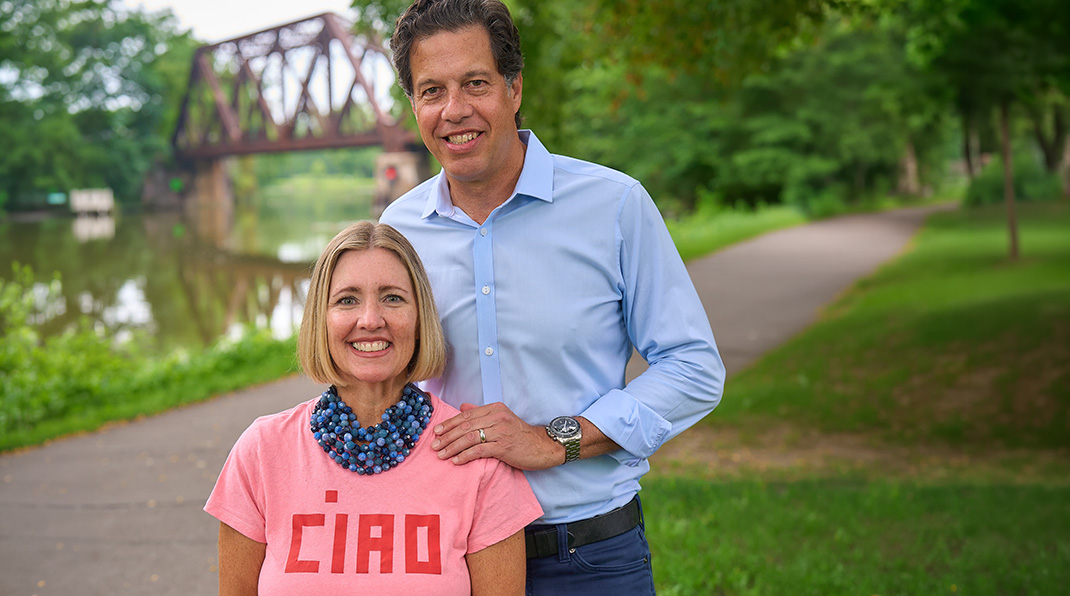
Tonya McBride Robles is ready. Is she ever. She has a lifetime of preparation for this arrival.
“Yes, I can’t wait to get started,” she said.
Her husband, Mike, is also ready.
“It’s your turn now,” he told her.
She supported his worldwide US Navy career; now he has a new role to fully support her.
Robles’ parents are ready.
They’re moving to Brighton into an in-law apartment in Tonya and Mike’s home.
Robles, 55, thought about that. “They’ve never lived north of the Mason-Dixon Line,” she said.
Wait until they experience lake effect snow.
“I think they’ll probably decamp to North Carolina for part of the winter,” Robles said.
On Aug. 17, Robles, a classically trained vocalist, took her chair as the new CEO and president of the Rochester Philharmonic.
“All of the things I’ve done in my past have prepared me for this role,” she said. “It’s been a circuitous path, but every step has led me to this place. I’m here in service to the music and that informs community, engagement, artistic excellence — and all the other things.”
There have been a lot of steps. But, like a family tree, she can trace everything back to one event in her life.
While studying for her degree in vocal performance at the Peabody Institute of Johns Hopkins College in Baltimore, she landed a paid internship at the Baltimore Symphony Orchestra.
“I worked that summer in the Artistic Administration Department with Miryam Yardumian, one of the greats in the field, one of the pure souls in the business and beyond,” Robles said. “She taught me what remains true to my philosophy today: it’s all about the music; everything you do has to be of service to the music.”
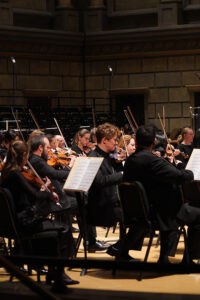
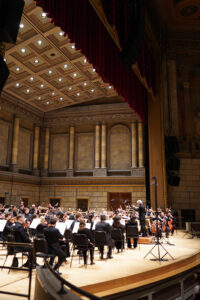
That music is what you and I experience when we hear the RPO. How that music is produced requires artistic and business and emotional talent. Robles has been charged by the RPO board of directors — with whom she already held a strategic planning meeting in July — to successfully complete a $50 million-plus comprehensive campaign to grow the endowment, expand the RPO’s education and community engagement programs and provide long-term sustainability.
Robles has the chops to guide that effort. She believes it. So does the board.
After her college internship with the Baltimore Symphony, she landed a full-time job with the BSO leading a program to bring music into city public and private schools and was promoted to education director, overseeing all youth and family programs and education counselors.
Then along came Mike.
And tar paper.
“My dad is a Baptist minister,” she explained. “He asked me to come to Delaware, where he was serving as director of missions, to a project rebuilding a church in an under-resourced area of Wilmington. I’m not talented at construction,” she confessed. “I said, ‘Dad, I want to help you but why would I do that?’ He said, ‘Just come over and help me with this project.’”
On the day she chose to help her dad, she first sang an aria in front of judges (a jury) and that did not go well. Then she got in the car to go to Delaware.
“I pull up to the church and there are 30 midshipmen working in the sun with their shirts off. The chaplain of the Annapolis Student Union pointed to the roof and told me, ‘There’s a young man, Mike, nailing tar paper to the roof and I think you should help him.’ I said, ‘Yes! I think I should!’
“Mike and I spent the weekend nailing tar paper on the roof. I gave him my phone number on the back of the aria I performed in my jury.”
In December 1995, Robles was furloughed for two weeks between Christmas and New Year as a result of budget challenges at the Baltimore Symphony.
“So, I had an unexpected couple of weeks off and I flew out to northern California to see Mike. And this is how everything is connected,” she said, unwinding the tale. “I didn’t know he was going to propose.”
“We went to hear the “Messiah” at the San Francisco Symphony. The conductor was Christopher Seaman, who is affiliated with the Rochester Philharmonic. I had worked with him in Baltimore and he gave us tickets. We met him backstage. He was the first person who knew we were engaged.”
Rather than wait, the young couple decided to light the afterburners and get married soon, really soon. “We had an eight-day engagement,” Robles said.
“My parents loved Mike. They were a little shocked at the short window of wedding planning, but my mom is a church organist and my dad is a preacher, so we had most of the ceremony set — my mom played for our wedding procession, my dad walked me down the aisle, then did a quick U-turn and married us. That was in New Orleans, the closest city to where Michael had flight school. A bunch of Navy friends attended and Mike’s parents came.”
Now the wife of an up-and-coming military officer, Robles’ life was set to change.
Mike got transferred to San Antonio. Tonya joined him and worked for the symphony there.
The next duty assignment was in Rota, Spain.
“In Rota, I ended up teaching at the Department of Defense school and I got my master’s degree in public administration from the University of Maryland Global Campus, which was a phenomenal experience: I had to take economics, quantitative analysis and statistics — things I probably wouldn’t have taken if I’d stayed in the States working for an orchestra…but they definitely helped my understanding of how to read budgets and approach other critical issues down the road,” she said.
Back to the States so Mike could teach a capstone course for Naval aviators at Annapolis.
“The executive director position at the Annapolis Symphony was opened right as we moved to Annapolis,” Robles said. “I ran the Annapolis Symphony Orchestra for three years.”
Next was Bahrain during the second Iraq War. The Robles took their 18-month-old son, Samuel, with them. “We spent a year there. Sam and I were sent home because of concerns about our safety,” she said.
Then Maine.
Mike was deployed from there often, while Tonya became the program director for the Ocean Park Association in that Chautauqua community. She oversaw musical programming and was made managing director. That lasted three years.
Mike was sent to Washington, DC, for language training; Tonya ran the Metropolitan Chorus as managing director for a year, doing marketing, fundraising and grant-writing.
Then Japan. Tonya taught music at the DOD school.
“I was able to direct the chorus and go into the community for cross-partnership international opportunities. We sang in English in festivals and listened to traditional Japanese music,” she said.
Back to Washington. “That was a short stint because we knew Mike was going to Ecuador to be the Naval Attache,” she explained. “I worked with the City Choir as its managing director.”
In Ecuador, she stepped in as the head of music for the British School and led more cross-cultural choral exchanges.
Last stop: Washington and the Pentagon before Mike retired.
Tonya worked familiar ground with the chorus at Peabody Institute and the Concert Artists of Baltimore. In 2016, the Baltimore Symphony asked her to come back as general manager. She worked there for six years, ending up as the chief operations officer. She made it through a work stoppage and the pandemic, but she said those six years were like “dog years” — longer than they should have been.
Tonya took the job of COO at the Nashville Symphony but it wasn’t a good match. Her next stop was vice president of expanded education for the New England Conservatory, where she worked with the prep school and the non conservatory programs, but a budget crunch evaporated the position last September.
She started thinking about her next step, one that was going to be so very important. She got offers. She had search firms talking to her. But she took her time. Months went by.
And then she got the recruiting package from the Rochester Philharmonic Orchestra.
“I wanted to make sure the next chapter was the right chapter in every sense,” she said.
She settled in to tell what struck her about the RPO.
“I was ready for a leadership position, to be the senior executive. I wanted to leverage all the life lessons, professionally and personally and bring that to an organization that had hallmarks of stability and a culture that was a good fit,” she said. “Every step in the process from Rochester was professionally done but there was more. For example — Katherine Lindahl and Diana Clarkson, the incoming and outgoing board chairs. They wrote a letter in the job-posting packet to invite candidates to apply, talking about Rochester. I’ve never seen that in any job search for an a executive at this level.”
Aspen Leadership Group, a national search firm, brought candidates to Rochester for the final in-person interviews and invited spouses to join and provided opportunities for them to meet board members, to come to a cocktail hour with the board…to get the RPO family to know not only the candidates, but their partners.
“These things don’t seem like a big deal, but they showed thoroughness and care and intentionality – that really set the tone for the entire search process,” Robles said, “It was unique to any of the processes I’d been through as a candidate or as a hiring manager. Everything has grown from those interactions.”
She saw the thinking behind the spousal invitations: “Being the CEO of an orchestra of any size is certainly not a 9-to-5 job. There’s a lot of expectation. A lot of events where a plus one is invited but not just invited, they’re expected to become part of the orchestra family and the community. I am truly blessed to have Mike as my partner. I’ve learned so much watching him lead as a US Naval officer. But he is also a phenomenal dinner companion. He has had the training. He’s service-minded and he’s good people.”
“We were a two-fer deal,” she summed up.
Robles said all her adult life she has been “jumping in, serving and getting involved, really immersed in the community. I said to the search committee, to the vice presidents, to my colleagues, ‘Put me in, coach!’”
“I want to go to every meeting, have town halls, coffees, dinners, whatever – meetings with all of the stakeholders of the orchestra. I want to be present for the musicians, for the staff, for staff members, donors and patrons. I want to be out and about sharing what I know about the RPO, making sure everyone knows what this orchestra already does in this community, and learning what we need to be in the second century of our existence.”
She leaves no doubts: Robles realizes she’s taking on something historic, something that means so much to people who love music in this area.
“This orchestra, which was founded by George Eastman as an orchestra for its community, has been punching above its weight artistically as long as I’ve been in this business,” she said.
What’s next?
“This is a beautiful inflection point because I’m showing up as the new CEO and we’re launching a new strategic plan and process which lends itself to conversations. In those conversations, not only can we hear what the community is expecting in the second century, but we’re making sure the community knows what we’re already bringing in terms of economic and cultural and intellectual vitality,” she said. “I’m well-poised to translate that into visioning and then executing what the next three to five years look like for the RPO. What permeates the DNA of this orchestra is the sense of community from its founding, an entrepreneurial and innovative spirt and excellence. I can’t overstate how excited I am to be coming to this community and this organization.”
Rochester Philharmonic Orchestra at Glance
Number of Employees: 30 full-time employees
Number of Musicians: 75 musicians, three conductors, and one conductor laureate
Annual Budget: $13.3 million
Shows Per Year: 70 full orchestra performances plus 210 education and community engagements
No. of people attending: 125,000 people attended the 2025/26 season concerts and engagements
RPO estimates it reaches 40,000 people in the region through free education and community programming.