
Security Systems Basics
What can help you keep your home secure?
By Deborah Jeanne Sergeant
Approximately 94 million Americans use some kind of home security system such as alarms and cameras and many of those install systems themselves, according to Safehome.org.
The same source indicated that most people don’t install security systems for crime deterrence. Notification of home deliveries is one reason many people want cameras. With DoorDash, Amazon and Instacart, it’s good to know when orders arrive.
Systems also help people keep an eye on pets, elders and children. For people with those needs, an entry-level system such as Ring doorbell cameras and Blink wireless cameras likely suffices. These systems relay real-time video and audio to the user’s Alexa or other monitor or mobile device using Bluetooth technology. Most are set up to record the past 24 hours of movement within the cameras’ range.
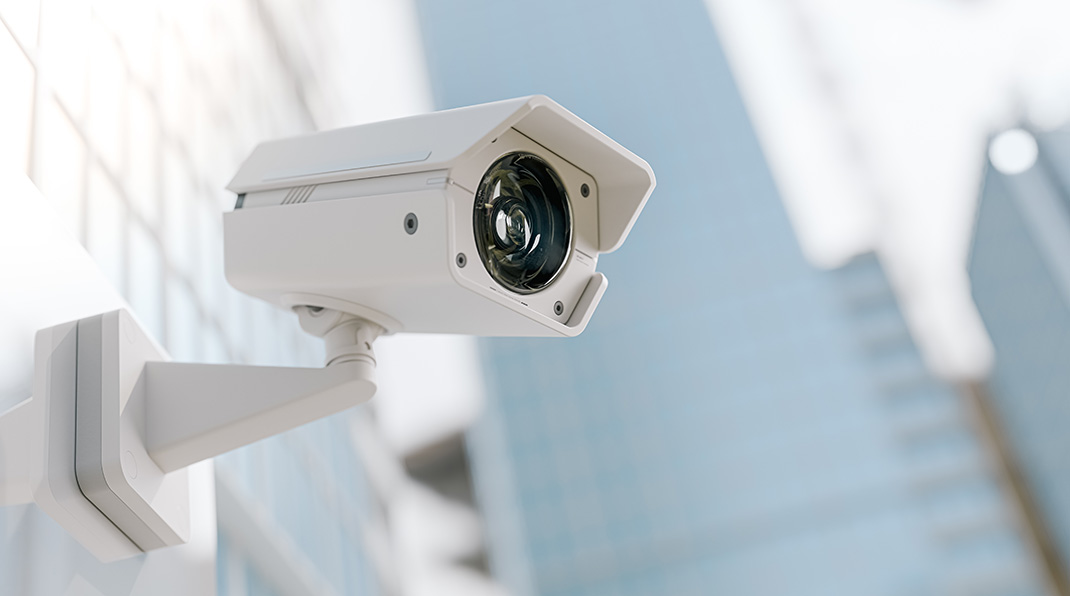
For detecting and deterring crime, a higher-level system may be needed. Gregory Bellamy, owner of Hawkeye Protection in Rochester, installs custom, professional-grade security systems.
“Just the Ring doorbell and Blink cameras are sometimes not enough depending on what you want to do,” Bellamy said. “They don’t get the same priority from dispatch that a system does from a company. They are self-installed versus installed by a professional. Blink and Ring aren’t enough to deter crime. If people are going to do bad things, they’re going to do bad things.”
One of the problems with Blink and Ring is that they chime when a stray cat wanders past the camera or a spider crawls across the camera lens. Eventually, users become tired of checking the notices since it becomes a case of “the little boy who cried wolf.”
More sophisticated security systems can analyze images and recognize faces of specific people and notify users about people not recognized.
“It can determine colors of cars and familiar cars so if it belongs at your house, you’ll know,” Bellamy said. “It will indicate my wife has come home. I have programmed it so it knows my car. It can do the same with people. If a squirrel goes by or deer, it doesn’t give you that alert unless I have it programmed to alert for animals.”
Another issue with Ring and Blink is that the footage is recorded and saved on the cloud. Bellamy said that it could be sold to study traffic patterns or other data collection reasons.
“It’s a slippery slope for data collection,” Bellamy said. “It can be used for advertising if enough people in your neighborhood have cameras.”
Professional systems allow users to record long-term (even for a year, a plus for someone who travels extensively), select visual search options and pan, tilt and zoom the camera, among other features. The zoom on lesser systems only lowers resolution to make it seem like the users is seeing the subject in the frame closer. This can result in pixelated, unclear images.
While wireless systems seem a smart move — they are easier to install, after all — high resolution systems use a lot of data and require wiring. In addition, wireless systems rely on WiFi and if the wifi goes out, a wireless system won’t record. Bellamy said that his systems record information on site that is also backed up online.
That sounds like a labyrinth of wiring, but with an ideal situation, a system can set up only two cameras to cover the entire dwelling.
Blink and Ring may be set up with local alarms. However, with professional systems, “your signals will be prioritized with the dispatch at the police department,” Bellamy said. “If we have a signal come through, they know it’s installed by a professional. They know we’re certified and they’re not dispatching needlessly. The police officers won’t have to go to false alarms.”
In addition to home safety, Bellamy said that his systems can include a personal safety element.
“You can hit a button on your cell phone and they can ping your location if you fell or were attacked,” he said.
A full alarm system is less than $1,000, plus $250 per camera. Monitoring starts at $35 per month.